Work
Gen-Motif
TL;DR
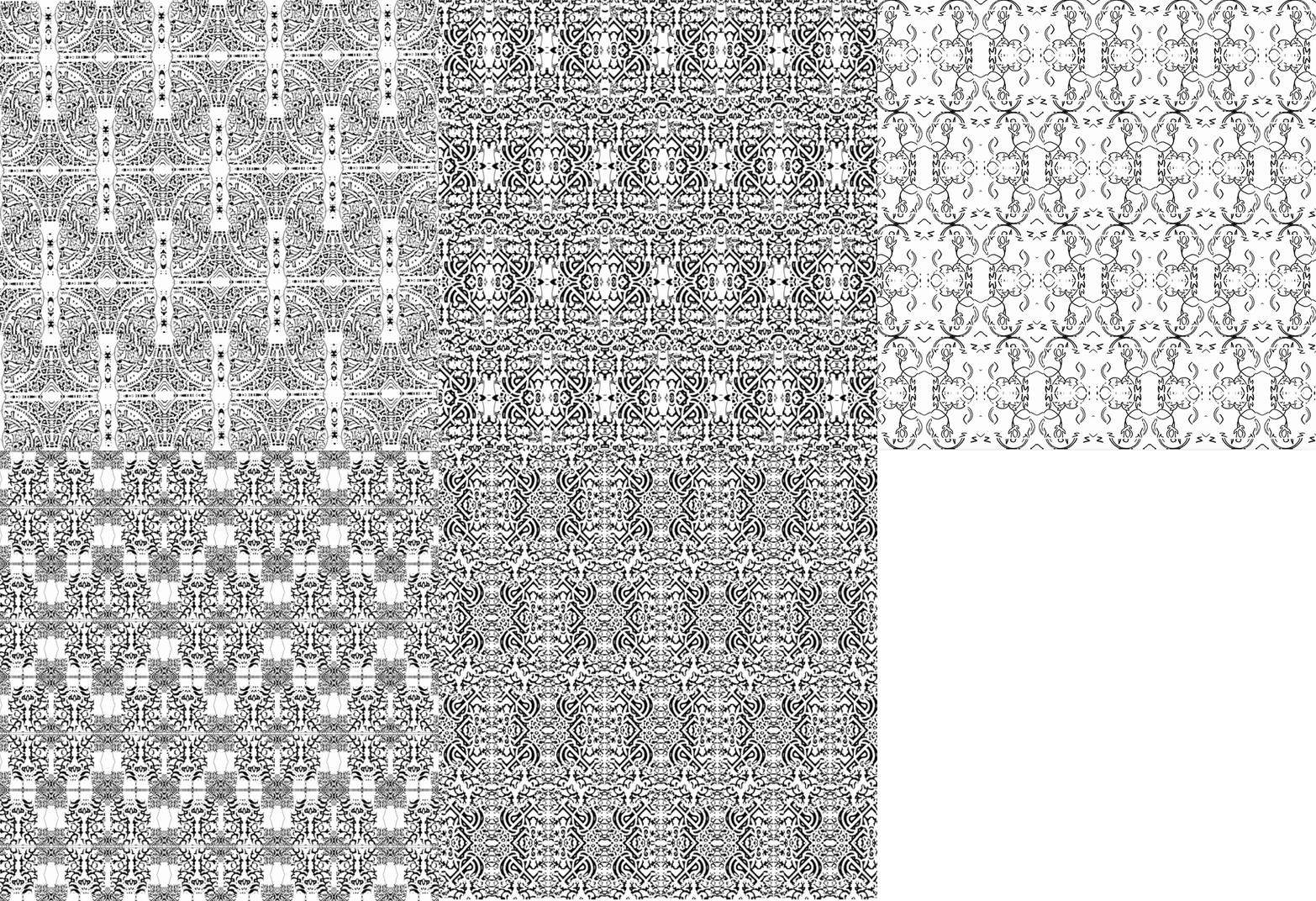
Gen-Motif is a generative design system that re-imagines cultural heritage motifs through computational extraction, generation, and tessellation. At its core, the project explores how artificial intelligence can serve as a creative collaborator to connect the precision of data-driven pattern analysis with the nuance of human aesthetic judgment. The project creates a scalable tool for designers and researchers to synthesize visual patterns quickly and efficiently.
 Try it out in HuggingFace! ↗
The current motif extraction workflow is slow and manual
45 minutesManual tracing process via Illustrator
25 minutesManual tessellation process
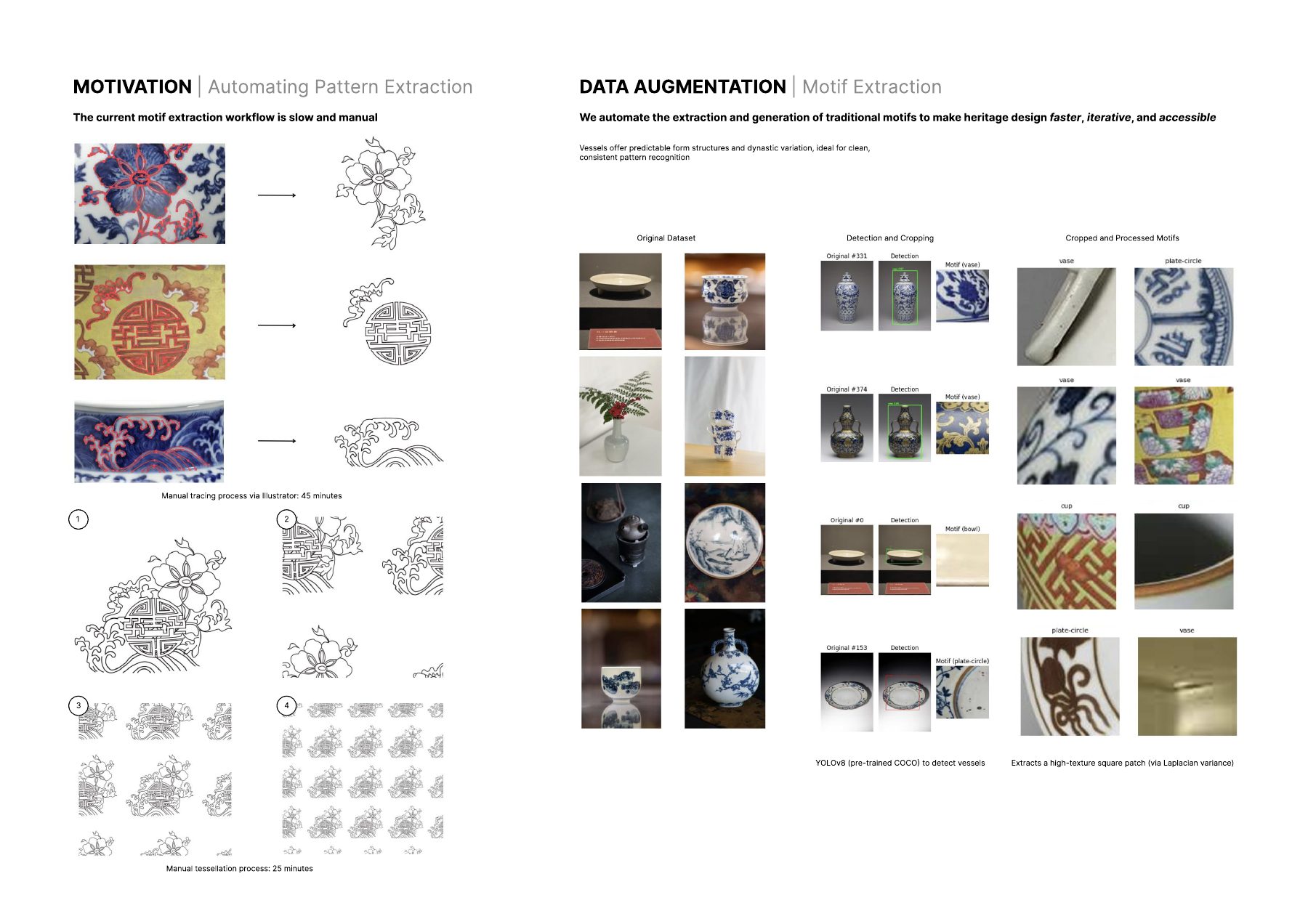
Thus, we wanted a way to automate the extraction and generation of traditional motifs to make heritage design faster, iterative, and accessible
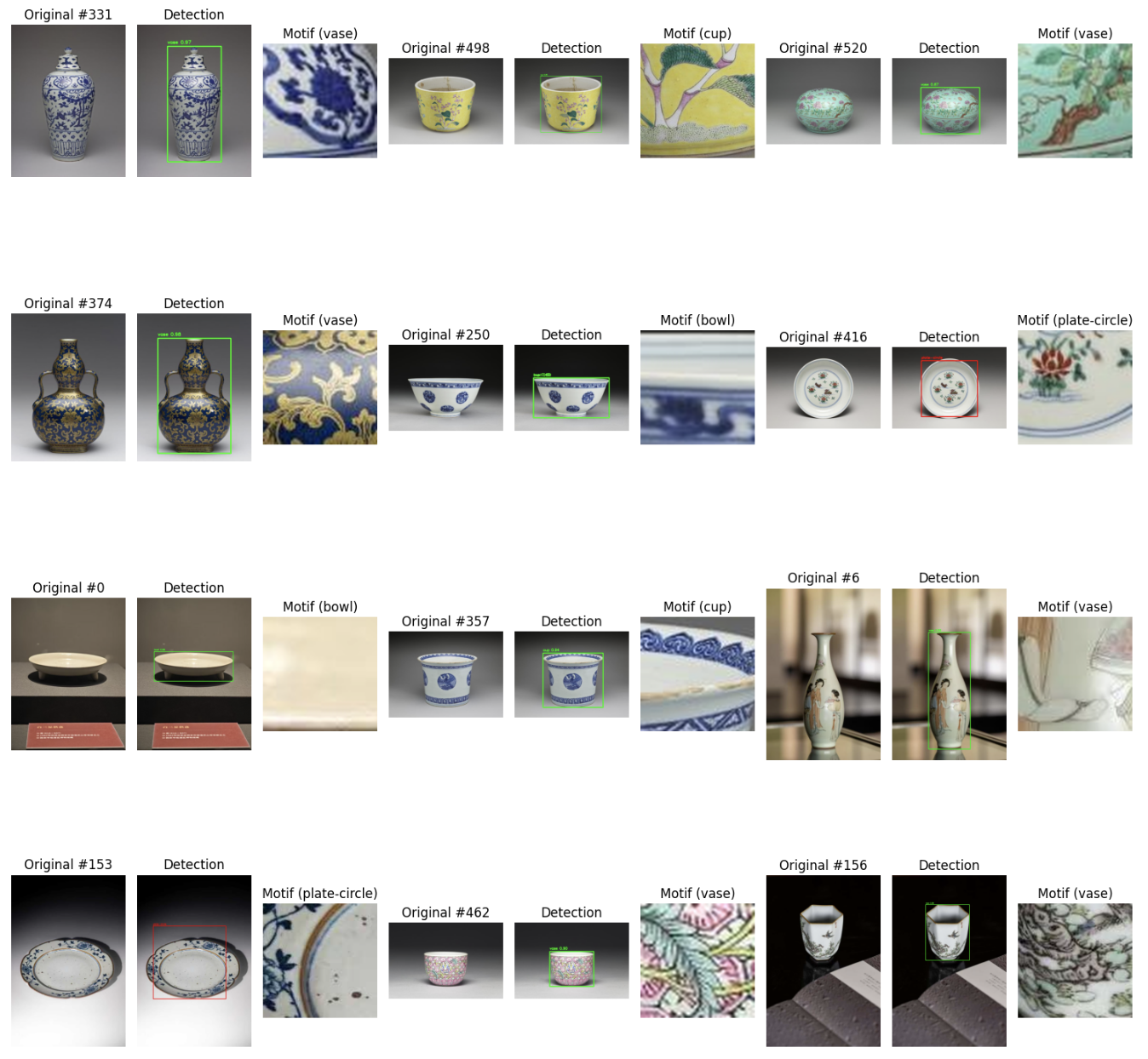
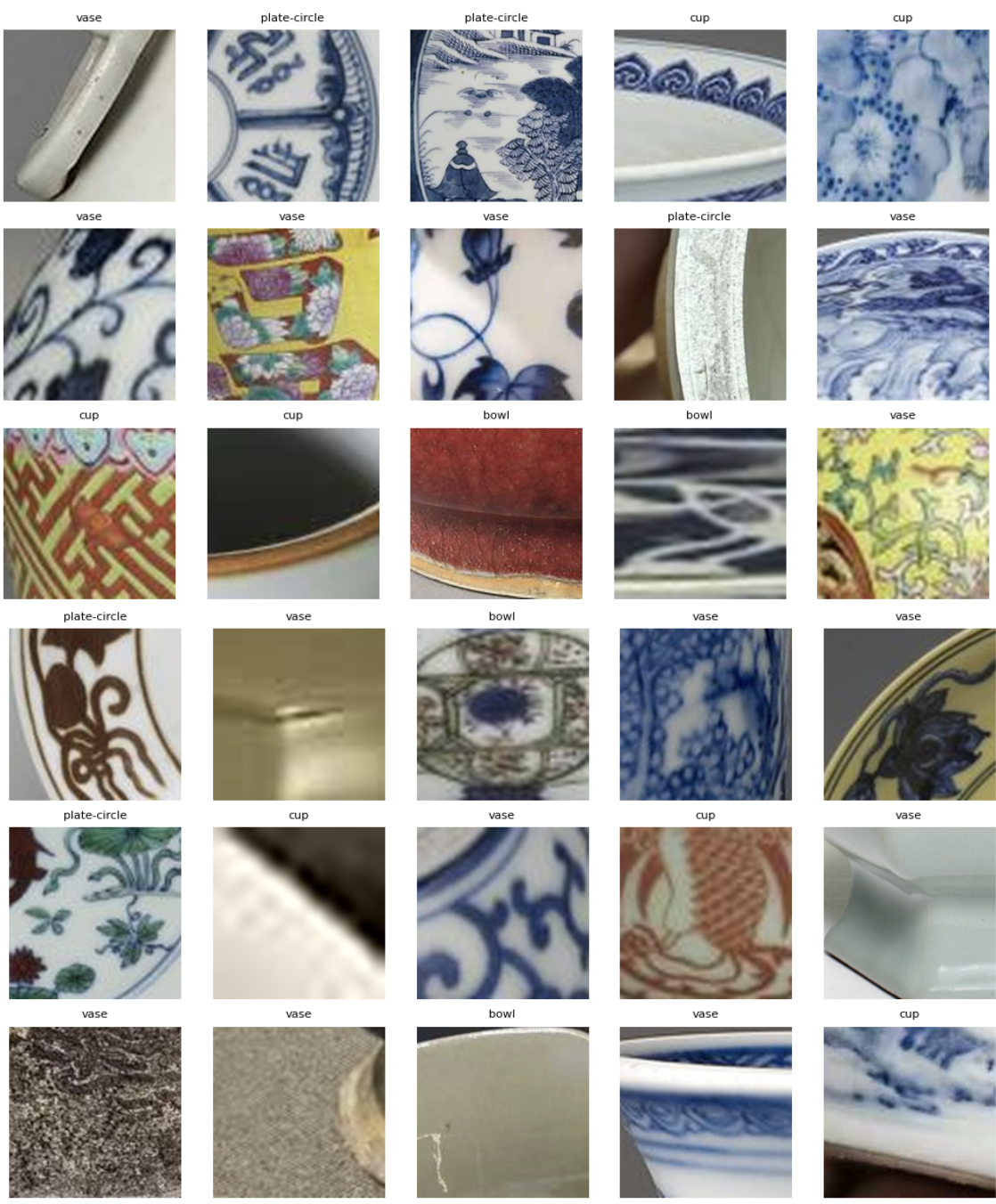
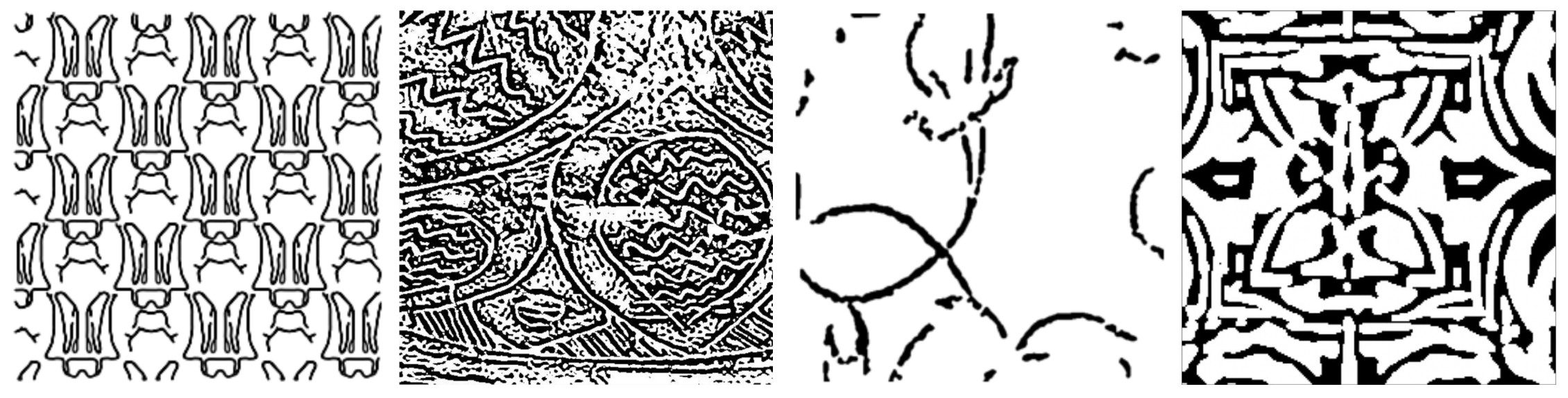
YOLOv8 detects vessels, then a high-texture square patch is extracted using Laplacian variance.
We automated extraction, generation, and tessellation through customized data curation and processing, model fine-tuning, and a post-processing workflow
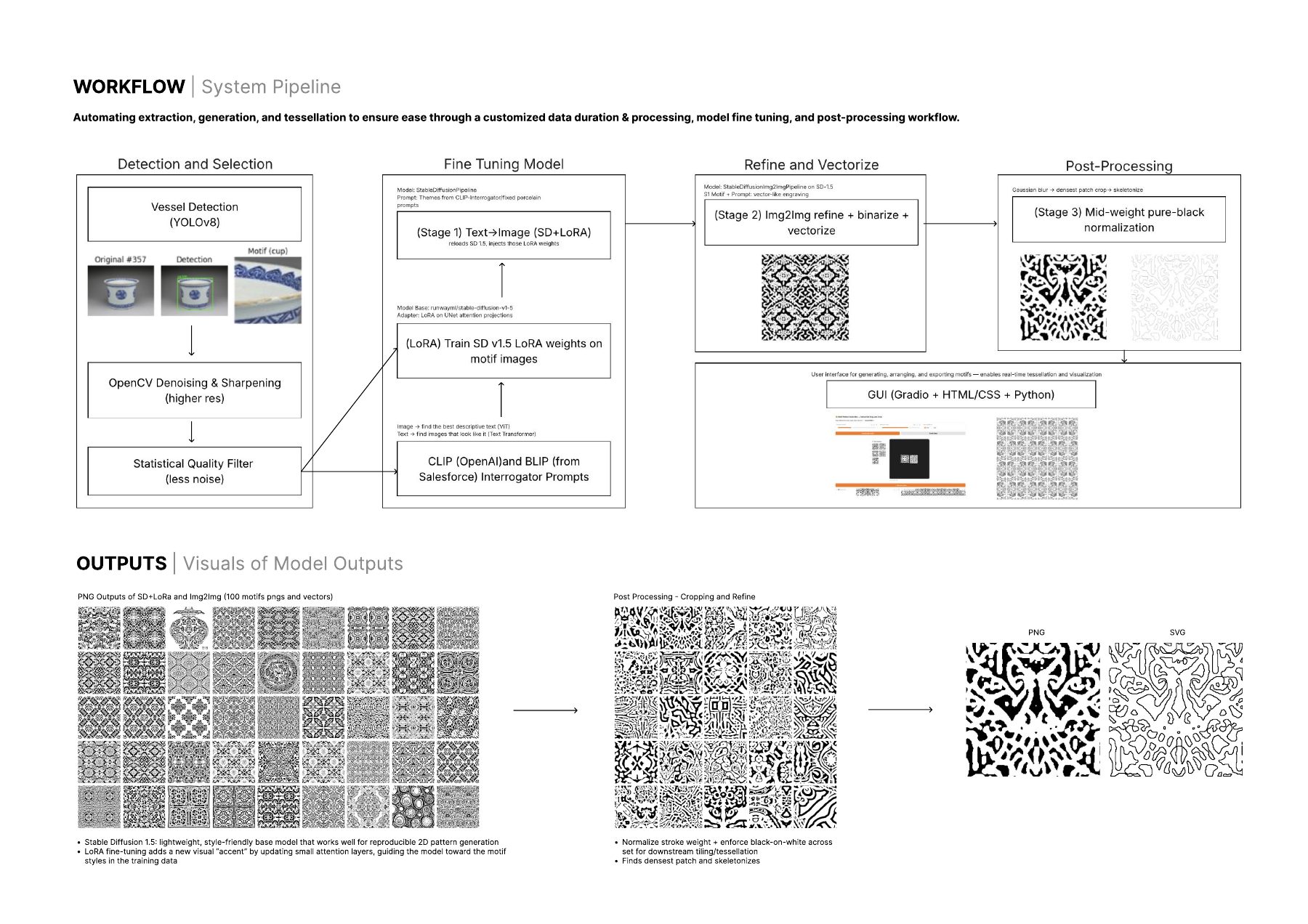
- Stable Diffusion 1.5 provides a lightweight, style-friendly base for reproducible 2D pattern generation.
- LoRA fine-tuning adds a new visual accent by updating small attention layers toward the motif styles in the training data.
- Stroke weight is normalized and black-on-white is enforced for downstream tiling and tessellation.
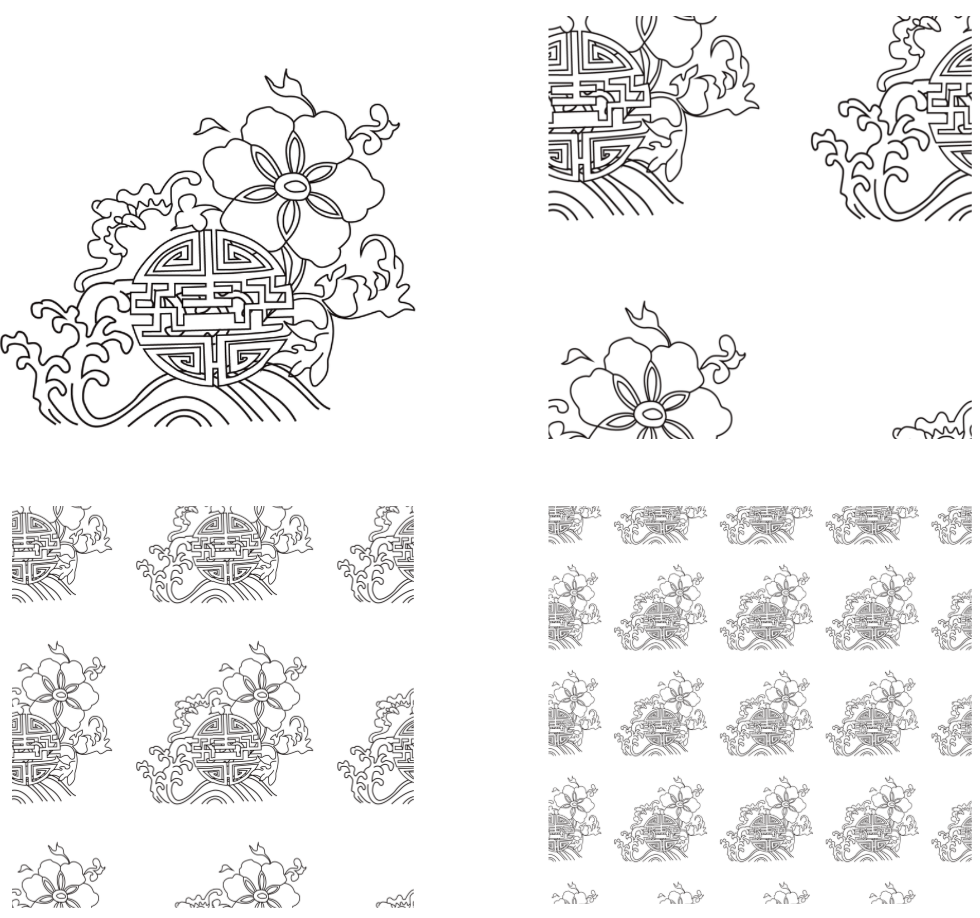
- The post-processing stage finds the densest patch and skeletonizes it.
The model outputs can be downloaded and used as PNG and SVG
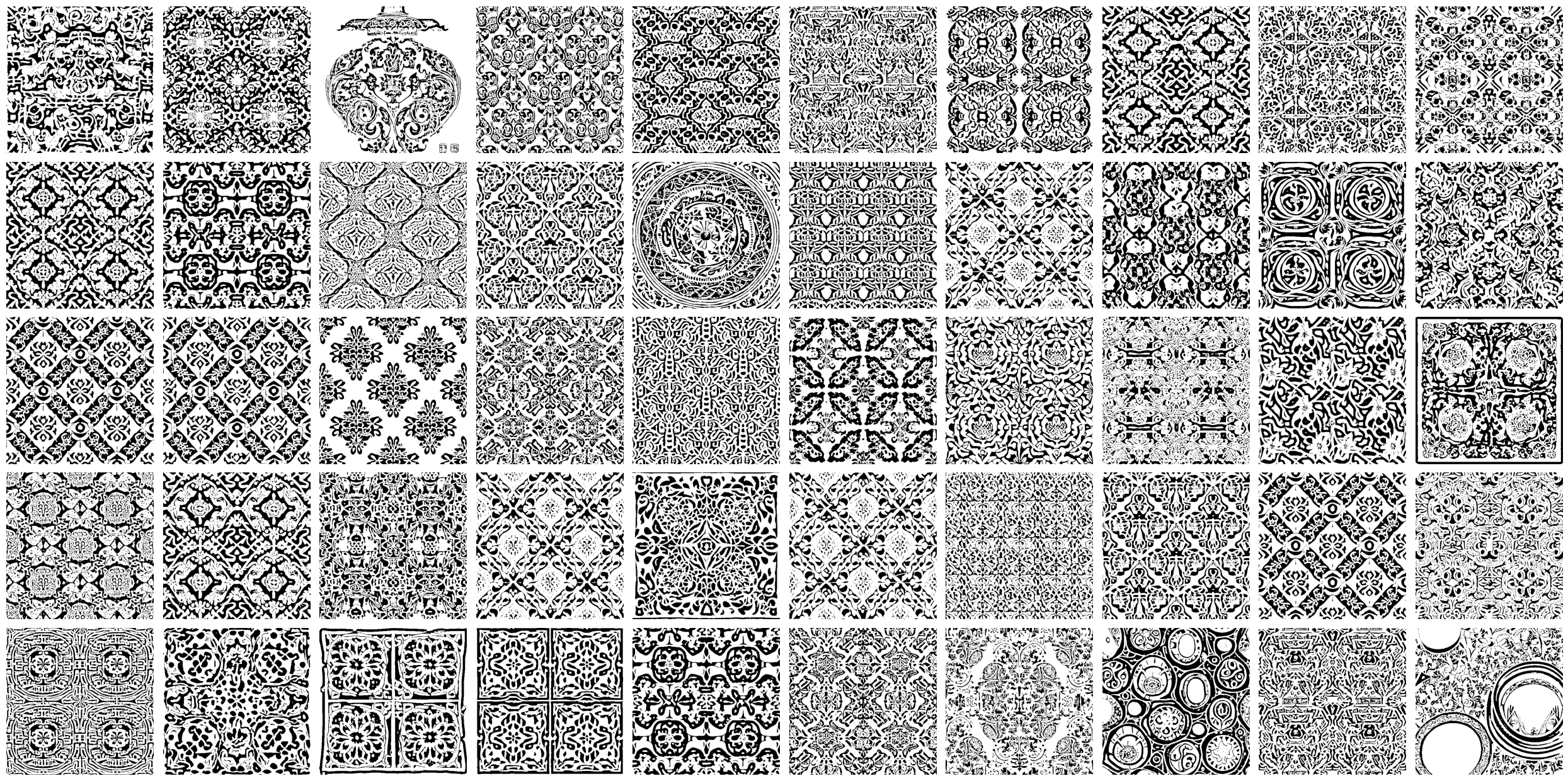
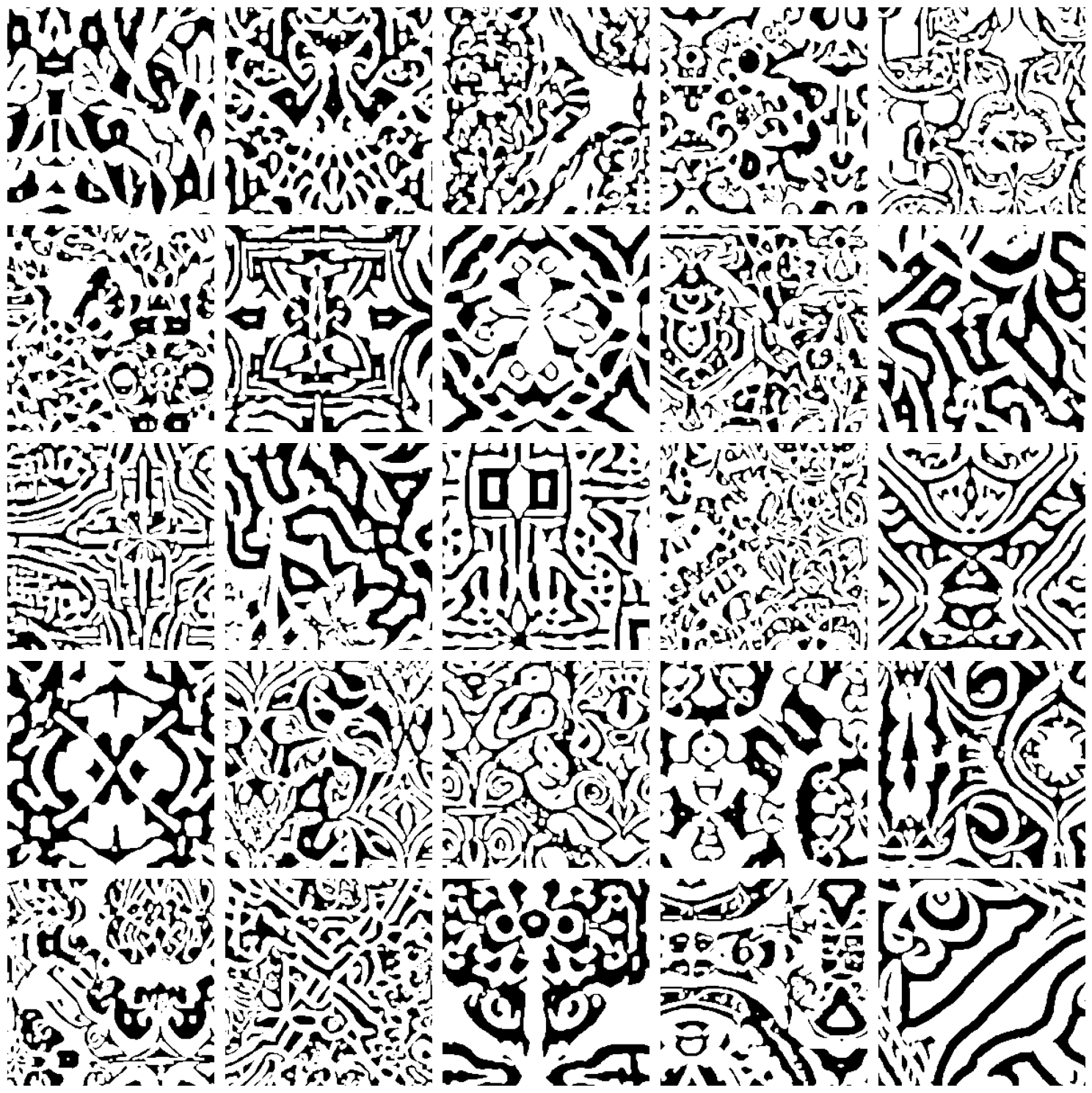
A live GUI has been deployed to Hugging Face
The interface gives individuals an accessible way to explore motif generation and creation while preserving cultural authenticity. Users can browse motifs, arrange compositions, generate tessellations, and export their results.
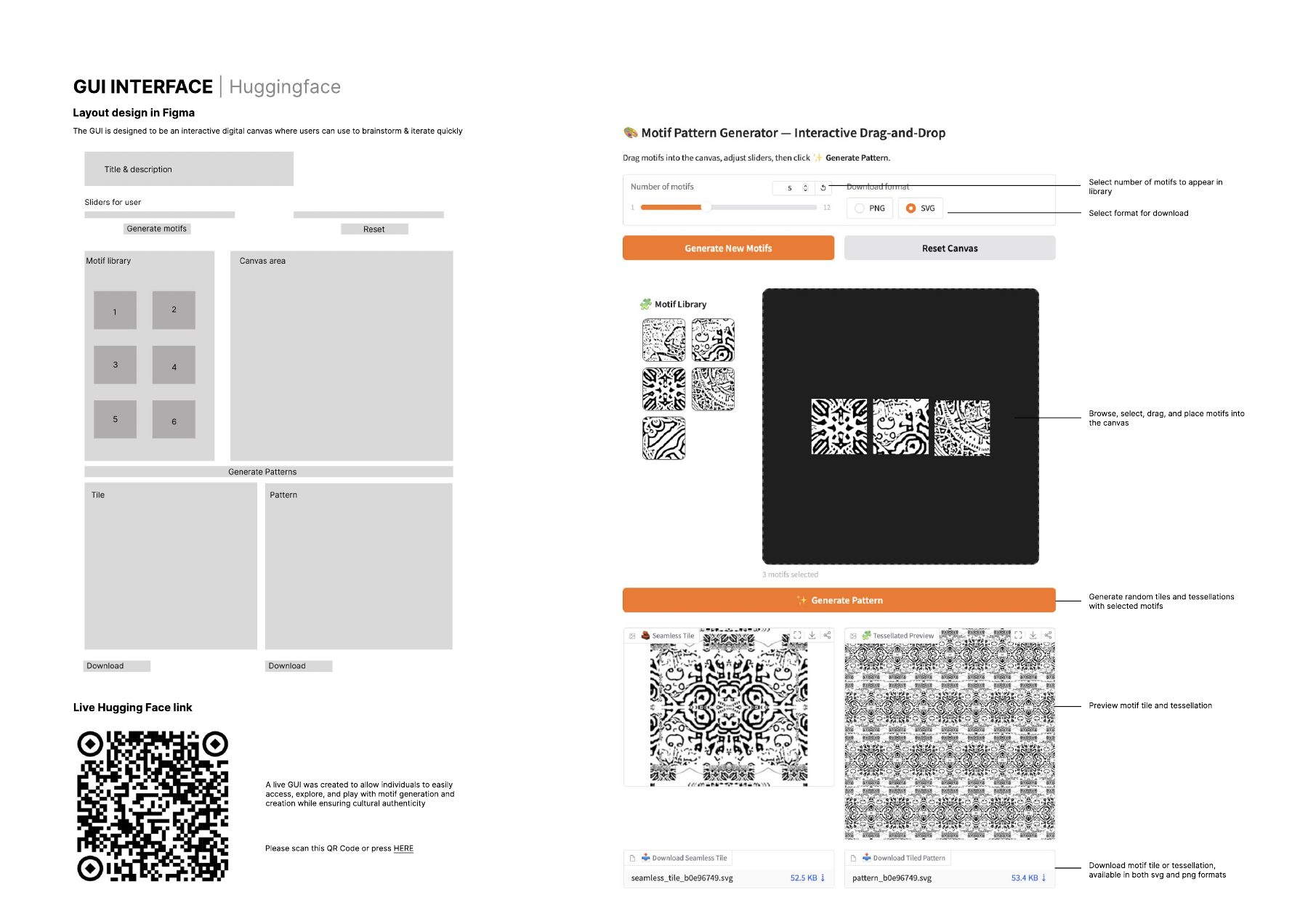 Open the live Gen-Motif interface ↗
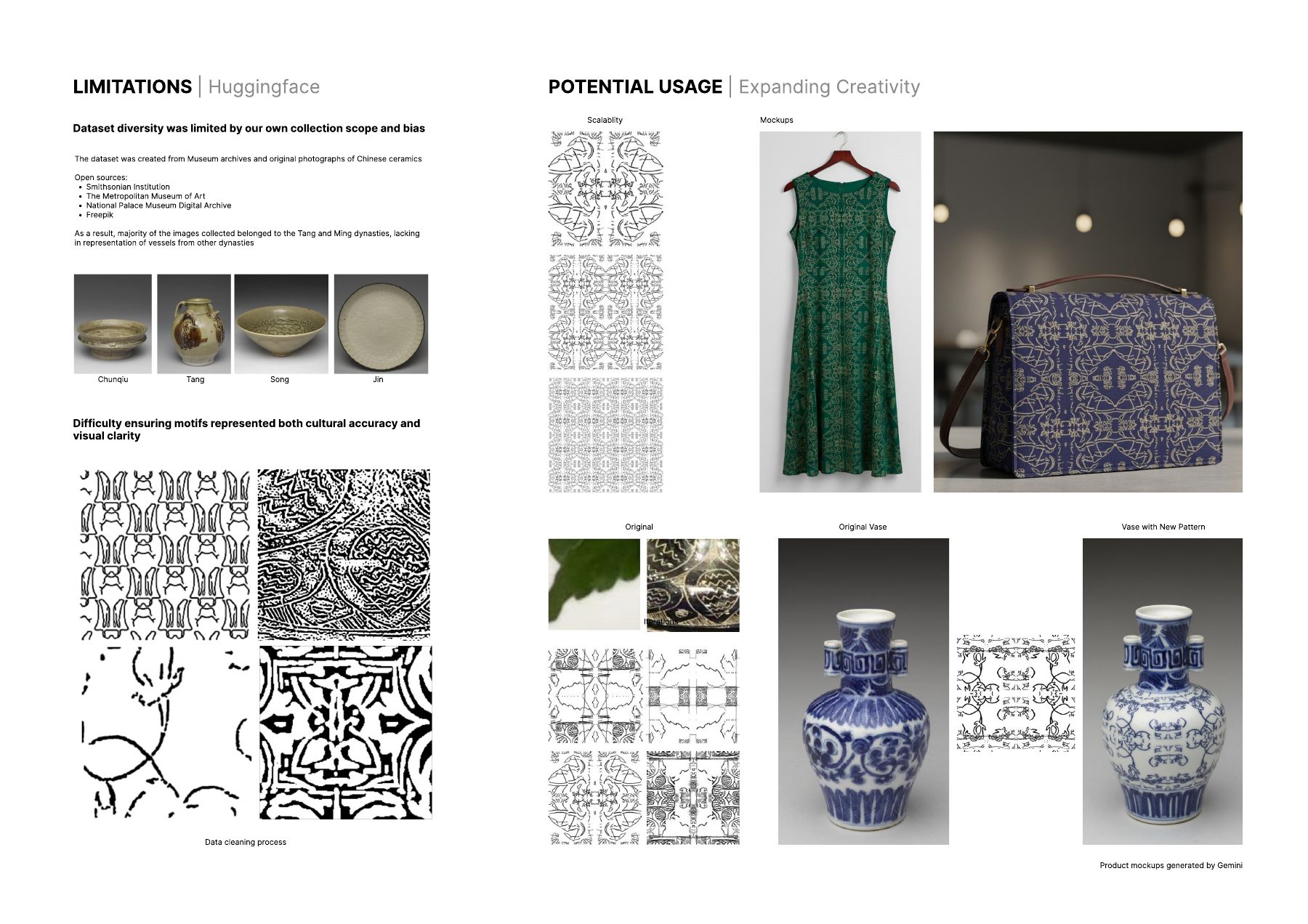
We acknowledge limitations in this project, including that dataset diversity was limited by our collection scope and bias
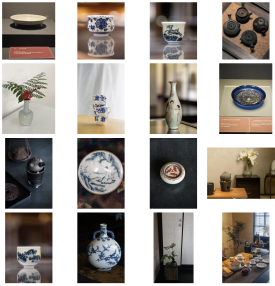
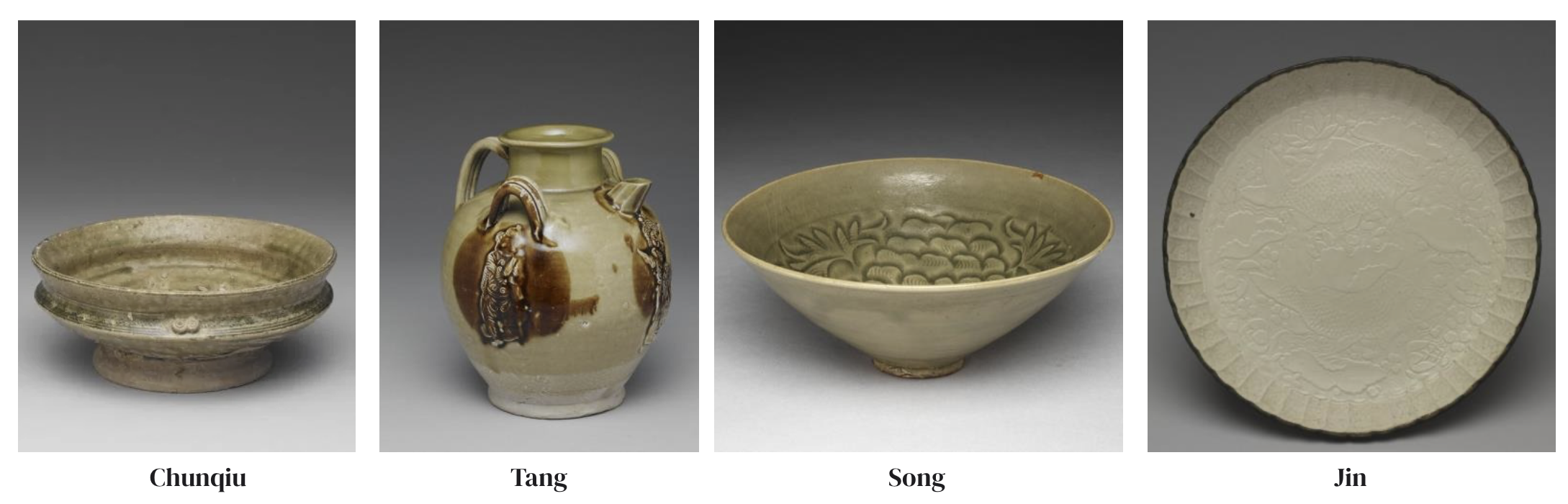
The dataset was created from museum archives and original photographs of Chinese ceramics.
Open sources:
- Smithsonian Institution
- The Metropolitan Museum of Art
- National Palace Museum Digital Archive
- Freepik
As a result, the majority of collected images belonged to the Tang and Ming dynasties, leaving other dynasties underrepresented.
It was difficult to ensure motifs represented both cultural accuracy and visual clarity
The intensive data-cleaning process made it difficult to ensure motifs factually represented both cultural accuracy and visual clarity.
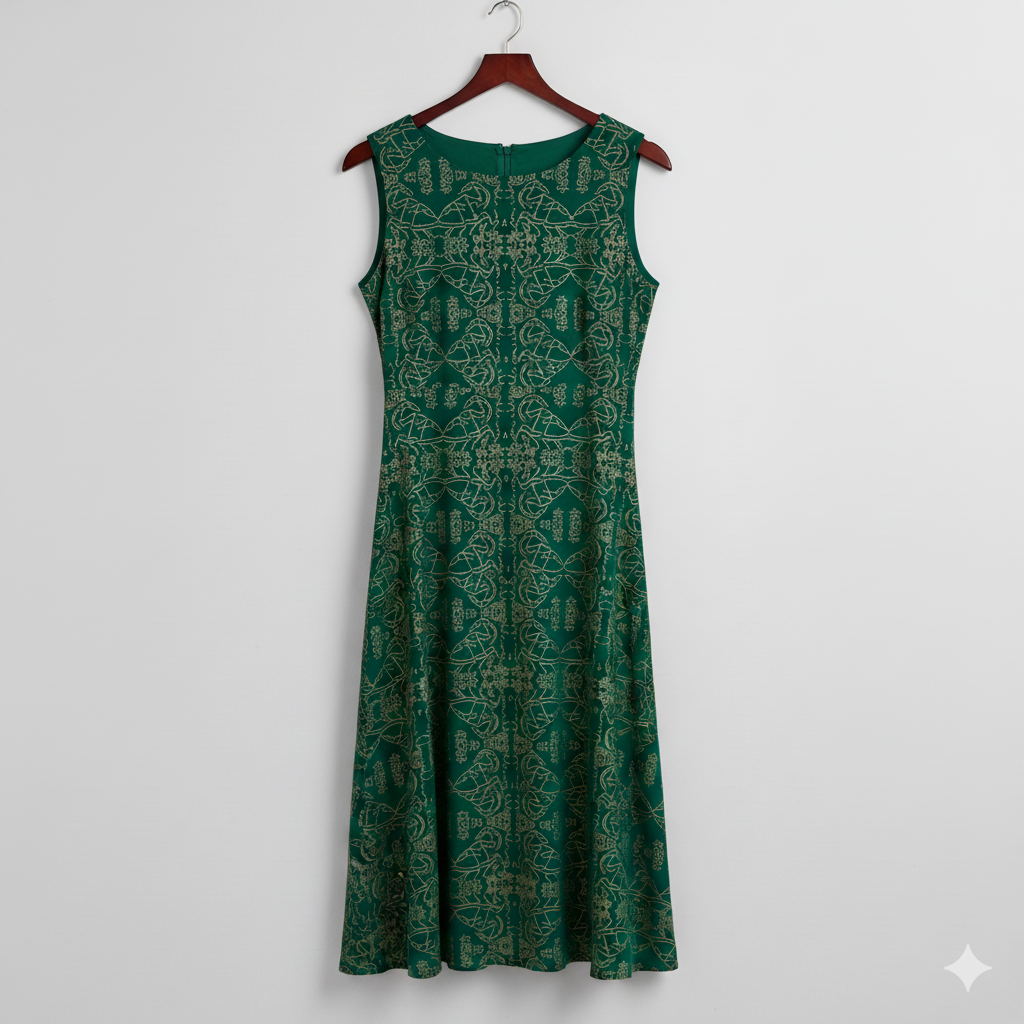
Nevertheless, there are numerous potential uses for this system